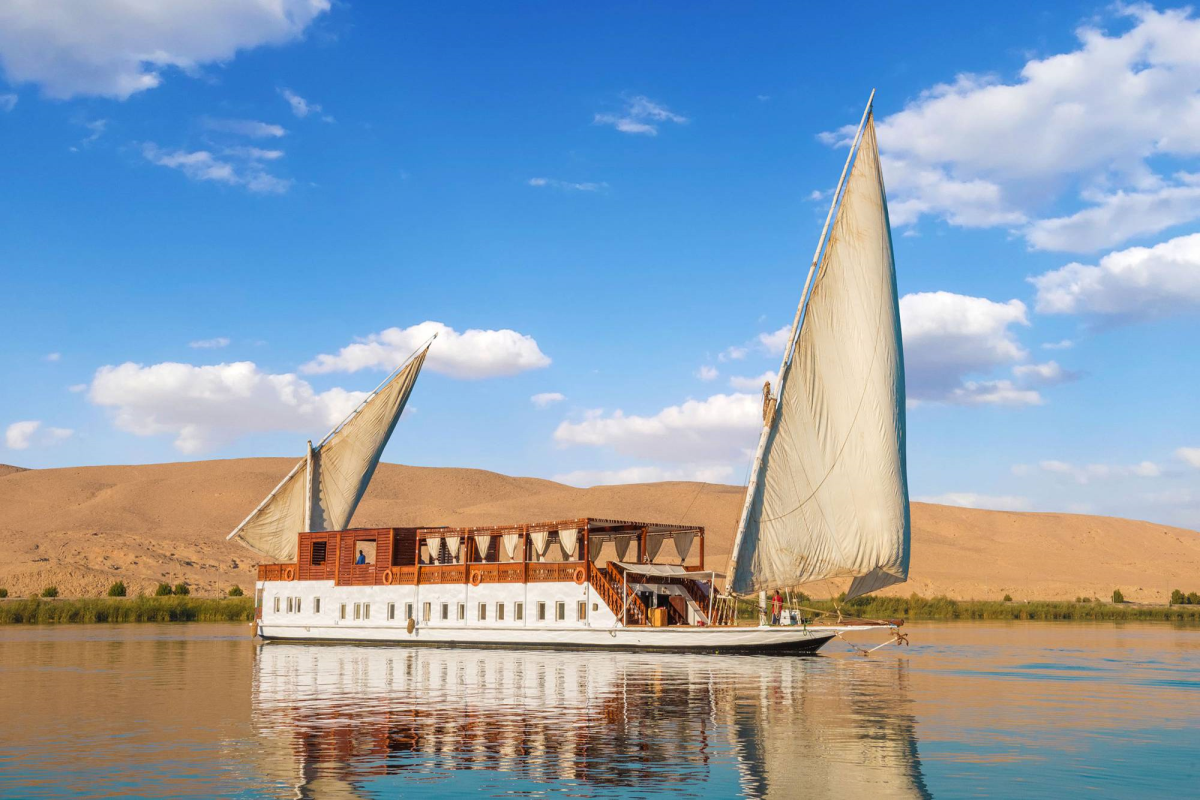
The magic of sailing the Nile
Why choosing the right cruise matters
Overview of both options
What is a Dahabiya?
History and Tradition
Traditional sailing boats used by 19th-century explorers
Modern luxury adaptations
Cultural significance
The Dahabiya Experience
Intimate sailing (12-20 passengers maximum)
Wind-powered navigation
Flexible itineraries
Authentic cultural interactions
Typical Dahabiya Itinerary
Aswan to Luxor or vice versa
Unique stops: Gebel el-Silsila, Kom Ombo, Edfu
Time for swimming and relaxation
Standard Nile Cruise Overview
The Conventional Experience
Large cruise ships (100-300 passengers)
Fixed schedules and itineraries
More facilities and entertainment
Advantages of Standard Cruises
More dining options
Entertainment programs
Spa and fitness facilities
Multiple deck levels
Typical Standard Cruise Itinerary
Luxor-Aswan round trip
Major temple stops
Structured excursion schedule
Detailed Comparison
Passenger Capacity
Dahabiya: 12-20 guests (intimate, personalized)
Standard: 100-300 guests (social, varied groups)
Navigation and Route
Dahabiya: Wind-dependent, flexible stops
Standard: Motor-powered, fixed schedule
Accommodation
Dahabiya: Spacious suites, traditional décor
Standard: Various room categories, modern amenities
Dining Experience
Dahabiya: Chef-prepared meals, dietary accommodations
Standard: Buffet/set menus, multiple restaurants
Cost Comparison
Dahabiya: Higher per-person cost, all-inclusive luxury
Standard: Range of price points, various packages
Cultural Immersion
Dahabiya: Authentic interactions, local village visits
Standard: Organized cultural programs
Who Should Choose What?
Choose Dahabiya If:
You prefer intimate, personalized experiences
Flexibility in schedule appeals to you
You want authentic cultural interactions
Budget allows for luxury experience
You’re traveling as a couple or small group
Choose Standard Cruise If:
You enjoy meeting other travelers
You want structured entertainment
Budget is a primary concern
You prefer modern amenities
You’re traveling with larger groups
Conclusion
Summary of key differences
Recommendation based on travel style
Call to action for consultation

 admin
August 9, 2023
admin
August 9, 2023